Vickie’s Story: Lower Back Pain, Neck Tension and Migraine-Related Discomfort
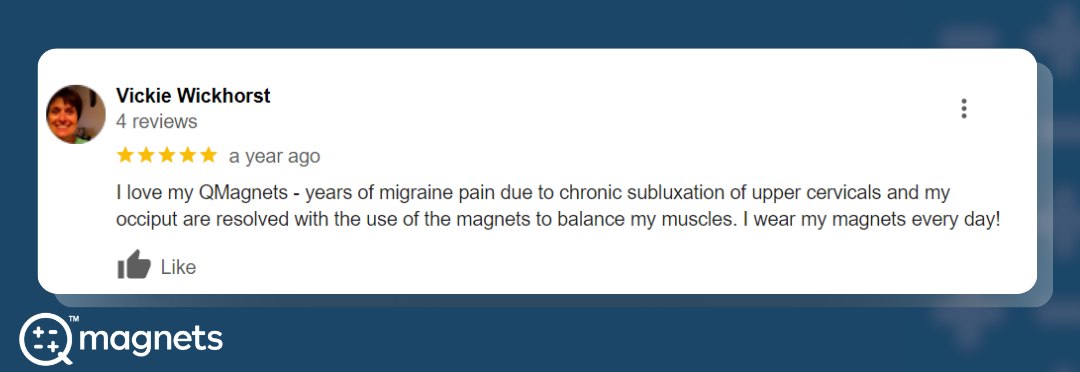
In her Google review, Vickie wrote:
“I love my QMagnets. Years of migraine pain due to chronic subluxation of upper cervicals and my occiput are resolved with the use of the magnets to balance my muscles. I wear my magnets every day!”
Her feedback form adds more context to that short review. Vickie was managing lower back pain, neck pain and headaches. She also described tension through her trapezius muscles, which she connected with tension on her occiput and very extreme migraine headaches.
What makes her story especially useful is the detail around daily use. Vickie has used Q Magnets for about a year and reported noticing effects immediately. After 15 days, she rated her pain at 2 out of 10, and after one month of regular use, she again reported a pain level of 2 out of 10.
That does not mean every person will experience the same response. But it does show how one customer experienced meaningful comfort and recovery support when Q Magnets became part of her everyday routine.
How Vickie Uses Bioflex Q Magnets Each Day
Vickie’s routine is simple, consistent and specific. She wears her magnets every day, often all day, to help manage muscle tension created by her job.
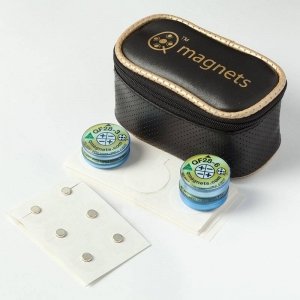
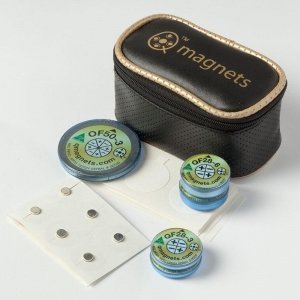
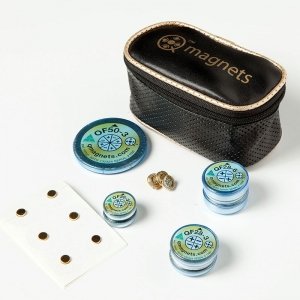
She places Q Magnets at the lumbar area and tailbone, and also inside the shoulder blade on each shoulder. For daily wear, she typically uses Bioflex concentric magnets, which she identifies as the magnets she uses most.
This is where Vickie’s experience naturally reflects the Q Magnets Field | Dose | Placement approach. Field relates to the type of magnetic field exposure created by the device. Dose includes the duration of exposure and the magnet selected for the area. Placement matters because the magnets need to be positioned in a way that relates to the person’s pain pattern, tissue depth and target area.
In Vickie’s case, her use was not random. It was consistent, anatomical and connected to the areas she wanted to support: lower back, tailbone, shoulder blade region, trapezius tension, neck comfort and migraine-related patterns.
Why Magnetic Field Gradients and Placement Matter
Q Magnets are designed as precision multipolar medical magnets, using engineered magnetic field gradients rather than simple one-direction magnetic fields. In practical terms, magnetic field gradients refer to spatial changes in the magnetic field near the body.
For people exploring magnetic therapy, this distinction matters because field design, exposure time and placement may all influence the way a person experiences comfort and recovery support. Vickie’s story does not require exaggerated claims. Her own words already show the pattern: she found Q Magnets easy to use, wore them daily, and associated them with less pain, more relaxed trapezius muscles and fewer issues with upper cervical and occiput tension.
The Quality-of-Life Difference Vickie Noticed
The most powerful part of Vickie’s feedback is not just the pain score. It is what changed in her daily life.
She wrote that the magnets had “almost eliminated” her lower back pain and helped her keep her trapezius muscles more relaxed. She also felt that what she spent on magnets was offset by improved work productivity, quality of life and reduced chiropractic care.
That kind of statement is grounded and practical. Vickie is not describing a miracle. She is describing a wellness support tool that became part of how she manages her body day to day.
She now owns most of the magnets produced by Q Magnets and rated the products and service 5 out of 5.
Learn how Q Magnets may help with back pain
A Daily Magnetic Therapy Routine Built Around Comfort
Vickie Wickhorst’s experience highlights an important lesson for anyone considering magnetic therapy, recovery support or natural recovery solutions: consistent use and careful placement may matter just as much as the product itself.
For Vickie, Q Magnets became a wearable wellness technology she could use throughout the day. Her Bioflex magnets supported her daily comfort routine across lower back pain, neck tension, trapezius tightness and migraine-related challenges.
Her story is a reminder that meaningful recovery support often comes from small, repeatable habits. For Vickie, wearing Q Magnets every day became one of those habits.