Understanding the “Window of Effectiveness”
Magnetic therapy is often presented as a simple question: does it work or not?
In reality, this is the wrong question.
Research and clinical experience suggest that static magnetic fields do not produce uniform effects across all situations. Instead, outcomes appear to depend on whether the field is applied within a specific range of conditions sometimes referred to as a “window of effectiveness”.
When this window is reached, meaningful changes in pain and recovery may occur.
When it is missed, there may be little or no noticeable effect.
Understanding this concept is key to using magnetic therapy correctly.
The “Window of Effectiveness”: A Better Way to Understand Magnetic Therapy
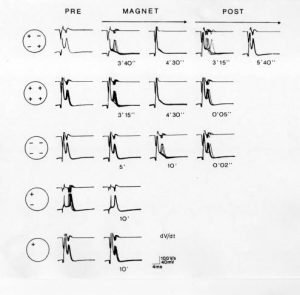
Biological systems do not respond in a simple on/off manner.
Instead, they often respond within ranges of sensitivity:
-
-
- Too little stimulus → no effect
- Optimal range → measurable response
- Outside that range again → reduced or absent effect
-
This type of behaviour is well recognised across physiology.
Static magnetic fields appear to follow a similar pattern.
Rather than asking “do magnets work?”, a more accurate question is:
Are the right conditions being met for a response to occur?
Biological responses to static magnetic fields may occur only within a specific range of conditions, rather than increasing linearly with strength.
Why Magnetic Therapy Results Can Vary
One of the most common observations is that magnetic therapy works well for some people, while others report little effect.
This variability is not unexpected.
Unlike pharmaceutical treatments, which deliver a fixed chemical dose, magnetic fields interact with the body in a context-dependent way.
Outcomes may vary depending on:
- The depth and type of target tissue
- The sensitivity of local nerve fibres
- The strength and structure of the magnetic field
- The duration of exposure
- The precision of placement
Small changes in any of these variables can shift the system into or out of the effective range.
The 3 Factors That Determine Results (Field | Dose | Placement)
To simplify this, Q Magnets uses a practical Field | Dose | Placement framework:
1. Field (Strength and Structure)
The magnetic field must be sufficient to reach the relevant biological target.
This includes:
- Depth of penetration
- Field gradient (how quickly the field changes in space)
- Alignment with tissue structures
In many cases, the goal is not simply “stronger,” but appropriately structured.
2. Dose (Duration of Exposure)
Unlike energy-based therapies, static magnetic fields do not deliver energy into tissue.
Instead, they create a persistent local environment.
This means:
- Effects may depend on continuous exposure
- Short applications may not be sufficient
- Longer wear times allow interaction with normal physiological processes
3. Placement (Location Relative to Target Tissue)
Placement is often the most critical variable.
A magnetic field must be positioned so that it:
- Interacts with the relevant nerve pathways or tissues
- Aligns with areas of dysfunction (e.g. spinal segments, trigger zones)
Even a well-designed magnet may produce little effect if placed incorrectly.
What Happens When the Window Is Missed
If the correct conditions are not met, magnetic therapy may appear ineffective.
Common reasons include:
- Field strength too low to reach the target tissue
- Incorrect placement relative to the source of pain
- Insufficient duration of exposure
- Mismatch between magnet size and treatment area
This helps explain why some people report no benefit, while others experience meaningful improvements.
A Practical Example: Why Magnet Size Can Matter
In some cases, treatment outcomes improved significantly when larger magnets were introduced.
For example:
- Smaller magnets may not adequately cover structures such as the sacroiliac joint or multiple spinal levels
- Larger formats can provide broader field coverage across these regions
- This increases the likelihood of interacting with the relevant neural structures
This does not mean larger is always better but rather that field size must match the target area.
What Research Suggests
Experimental studies have shown that the biological effects of static magnetic fields can depend on specific parameters such as:
- Field strength
- Exposure duration
- Application conditions
Some studies report reductions in pain-related responses or inflammation under certain conditions, while others show minimal effects.
Rather than contradicting each other, these findings may reflect differences in whether the effective range was reached.
Why This Explains the Debate Around Magnetic Therapy
Magnetic therapy has long been debated.
One reason is that studies and real-world use often vary widely in:
- Magnet strength
- Exposure time
- Placement methods
If outcomes depend on a “window of effectiveness,” then inconsistent results are expected when these variables are not controlled.
This shifts the discussion from:
“Does it work?”
to:
“Under what conditions does it work?”
How to Apply This in Practice
For those using magnetic therapy, a practical approach is:
- Position magnets either at the site of pain or relevant spinal level
- Ensure adequate field strength for the target depth
- Wear consistently over time rather than short sessions
- Adjust placement if no response is observed
Small adjustments can make a significant difference.
The Direction of Magnetic Therapy
Modern approaches to magnetic therapy are moving toward:
- Better understanding of field gradients
- Improved device design
- More precise application strategies
Rather than relying on simple assumptions, the focus is increasingly on matching field properties to biological targets.
For a terrific summary on the concept of Electrotherapeutic Windows, see Tim Watson’s article
Find Your Optimal Setup
Understanding the “window of effectiveness” is the first step.
Applying it correctly is what determines results.
Learn how to position magnets effectively
Explore application guides for specific conditions like back pain or TMJ pain
See how field design influences outcomes
Further Reading
References
Laszlo J, Reiczigel J, Szekely L, Gasparics A, Bogar I, Bors L, Racz B, Gyires K. (2007) Optimization of static magnetic field parameters improves analgesic effect in mice. Bioelectromagnetics 28(8):615-627. PMID: 17654477. DOI: 10.1002/bem.20341
Morris CE, Skalak TC. (2008) Acute Exposure to a Moderate Strength Static Magnetic Field Reduces Edema Formation In Rats. Am J Physiol Heart Circ Physiol. 294(1):H50-7. PMID: 17982018. DOI: 10.1152/ajpheart.00529.2007
Frequently Asked Questions
1. How do Q Magnets work?
Q Magnets are designed to create localized static magnetic field gradients using multipolar magnet geometry. Unlike simple bipolar magnets, Q Magnets use alternating poles within one device to produce a more complex field pattern.
The proposed biological effect is not based simply on magnet strength. Instead, Q Magnets are positioned through Field | Dose | Placement:
Field: multipolar geometry and localized gradients.
Dose: magnet size, field strength, tissue depth, exposure time, and cumulative use.
Placement: accurate positioning over or near the relevant nerve, joint, soft tissue, acupressure point, or referral pathway.
Research and theoretical work suggest that steep static magnetic field gradients may influence neuronal membrane excitability and ion channel behaviour. This may help explain why correct placement and model selection are so important.
Q Magnets should therefore be understood as precision field-based recovery tools rather than general-purpose magnets.
2. What is the “Sweet Spot” of a Q Magnet?
The “Sweet Spot” refers to the most important field interaction zone of the magnet. In Q Magnets, this is associated with the localized field gradients created at the boundaries between alternating magnetic poles.
This concept is closely related to Field | Dose | Placement. The field geometry creates the “sweet spot,” the size of the magnet influences the likely dose and tissue depth, and correct placement determines whether the target area is exposed to the intended part of the field.
Larger Q Magnets generally create a broader and deeper field environment. Smaller Q Magnets may be more suitable for superficial or precise applications, but they usually require more accurate placement because the effective area is smaller.
This is why the Body Map, Device Selection page, and product model information are important. The best choice is not always the strongest magnet; it is the magnet whose field, dose, and placement match the target area.
3. Since placement of Q Magnets is critical, how does one find the specific placement?
The simplest starting point is to place the Q Magnet over the area of tenderness. This may be suitable for local pain patterns such as a tender tendon, joint, muscle area, or minor localized injury.
However, placement is not always obvious. Pain may be referred from another area, influenced by nerve pathways, or related to spinal segments, acupressure points, or sensitized neural structures. In these cases, multiple Q Magnets may be used along relevant nerve pathways or related anatomical regions.
This is where Field | Dose | Placement becomes practical. The field must be appropriate for the target, the magnet size and exposure must match the depth and tissue, and the placement must be accurate enough to expose the intended area to the field gradient.
For example, a local sting or tennis elbow tenderness may respond best to direct placement over tender spots. A radiating nerve pattern may require placement closer to the relevant spinal level or nerve pathway. Acupressure-style placements may also be used in some protocols.
For most users, the Body Map is the best starting point because it gives recommended placements and magnet combinations. More complex pain syndromes may require guidance from a practitioner with knowledge of anatomy, neurology, physiotherapy, or acupuncture-style point selection.
4. How do I know which Q Magnet to use?
Choosing the right Q Magnet depends on the target area, tissue depth, magnet size, polarity pattern, and placement goal. This is the practical role of Field | Dose | Placement: The field design, exposure dose, and anatomical placement all need to work together.
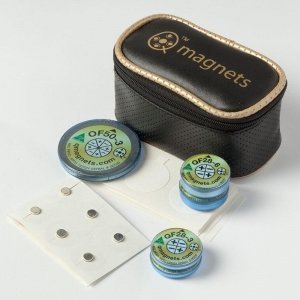
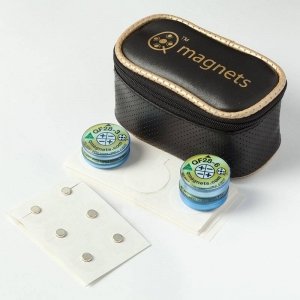
Q Magnets come in different sizes, strengths, thicknesses, and polarity arrangements, including quadrupolar, hexapolar, octapolar, and other multipolar configurations. In general, smaller magnets are often used for more superficial or precise applications, while larger or thicker models may be used where deeper penetration or broader exposure is needed.
A useful way to learn the range is to review the Device Selection information and the Products page, especially the individual magnet descriptions, sizes, and penetration depth guidance. Strongest is not always best. The right magnet is the one whose field and dose best match the target tissue.
For first-time users, the Body Map on the How to Use Q Magnets page is often the easiest starting point. It provides recommended magnets, placements, and application protocols based on Q Magnets’ research, clinical experience, acupuncture principles, and physiotherapy reasoning.
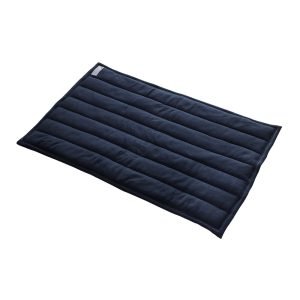
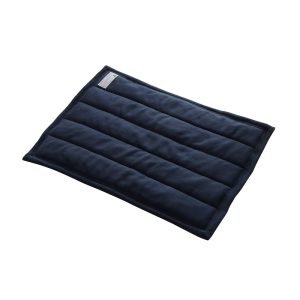
The Q Bonus Packages are also a practical first option because they include a variety of magnets suitable for small joints, large joints, and acupoint-style placements. Q Blankets may be a good choice for those looking for a comfortable sleep-time or rest-time static magnetic field environment, either as a throw-over blanket or used like a magnetic mattress pad.