How Can Lower Back Pain Persist for Decades?
In 1985, John suffered a lower back injury while lifting and twisting, resulting in disc bulges at L3/4 and L5/S1. Over the next decade he consulted no fewer than 12 specialists and spent thousands of dollars on treatments including physiotherapy, chiropractic care, acupuncture, microwave therapy, and an epidural injection.
Despite these efforts, he continued to experience ongoing pain.
As John explained:
“I have spent over 26 years on an average of 6/10 in pain and have taken pain medication daily for all this time.”
Understanding Chronic Low Back Pain and Recovery Physiology
How Q Magnets Were Applied for John’s Lower Back Pain
After attending a National Pain Week seminar, John decided to trial Q Magnets despite being initially sceptical.
According to the original case report, Dianne Hermans placed:
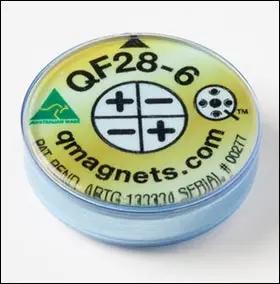
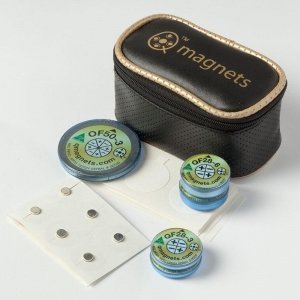
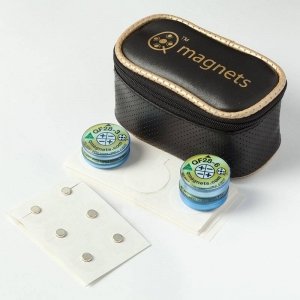
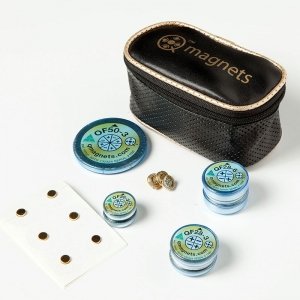
QF28-6 Q Magnet
- One QF28-6 device over L3/4
- One QF28-6 device over L5/S1
This reflects the Q Magnets principle of Field | Dose | Placement (FDP), where magnet selection and anatomical positioning are considered important variables rather than adopting a one-size-fits-all approach.
Q Magnets are positioned as precision multipolar medical magnets that create localized static magnetic field environments rather than continuously delivering energy into the body.
John’s Experience After Using Q Magnets
John reported noticing an unusual sensation almost immediately after application.
However, it was the following morning that he noticed the most significant change.
As he described:
“I could feel a strange sensation in my back almost immediately, but it wasn’t until the next day when I got out of bed. My wife said, ‘look at you!’ For the first time in over 20 years I got straight out of bed with no pain.”
He continued:
“During the day I was able to get up from sitting with ease, again something I have been unable to do for decades.”
Two weeks later he reported:
“Two weeks later and my pain during the day is now about 1/10. To say that I am excited is an understatement. Thank you Q Magnets.”
John Withy, Manly, QLD
Why Do Some People Respond Quickly While Others Do Not?
Response Variability and When Q Magnets May Not Help
Exploring Q Magnets as Part of a Lower Back Pain Recovery Strategy
Long-term lower back pain remains one of the most common and challenging health concerns worldwide.
For people like John who have explored multiple treatment options without success, Q Magnets may represent a conservative, non-pharmaceutical option worth investigating.
If you would like practical guidance, explore the Lower Back Pain Treatment Protocol and Magnetic Therapy for Low Back Pain resources to learn more about Field | Dose | Placement and recommended application approaches.
Not all lower back pain is the same. Disc irritation, nervous system sensitization, movement patterns, and mechanical nerve compression can all contribute differently to symptoms. Accurate diagnosis and appropriate placement remain important considerations when exploring Q Magnets as a recovery support option.
Understanding Chronic Low Back Pain and Recovery Physiology
Persistent low back pain is one of the most common reasons people seek ongoing treatment. Modern pain science recognises that long-term pain may involve not only structural issues but also changes in nervous system sensitivity and altered pain signalling patterns. Q Magnets content frameworks position this within nervous system regulation and sensitized nerve modulation rather than purely structural explanations.
What Happens in the Body with Chronic Disc-Related Back Pain?
Disc injuries can create a complex pain picture. Some pain may arise from tissue irritation and inflammatory processes, while other cases involve mechanical pressure on nerve structures. In persistent cases, nervous system sensitization may also contribute to ongoing discomfort even when tissue healing has occurred. Current Q Magnets educational frameworks discuss the possibility that engineered static magnetic field gradients may support nervous system regulation through mechanisms related to membrane excitability and altered neuronal responsiveness. These concepts remain scientifically cautious and are described as plausible mechanisms rather than established facts.
This is why modern discussions increasingly focus on recovery physiology, nervous system modulation, and Field | Dose | Placement rather than simplistic explanations.
When dealing with chronic low back pain, it is important to distinguish between inflammatory or sensitized pain patterns and mechanical nerve compression. Appropriate diagnosis remains essential, particularly when symptoms are severe, worsening, or involve neurological changes.
Response Variability and When Q Magnets May Not Help
James Hermans noted that while John’s response may appear remarkable, it is not necessarily unique among some disc-related pain presentations. However, response variability remains important. Some people report rapid changes, while others may require:
- Longer application periods
- Different placement strategies
- Rehabilitation support
- Movement retraining
- Professional guidance
Some individuals may not respond to Q Magnets at all. This variability aligns with the FDP framework, where anatomy, tissue depth, placement accuracy, exposure duration, and the nature of the condition may all influence outcomes.
When Might Q Magnets Not Help Lower Back Pain?
One important limitation involves mechanical nerve compression. According to Q Magnets clinical observations, severe disc herniations causing direct pressure on spinal nerves may not respond to magnetic therapy and require medical assessment.
Professional diagnosis should always be sought if symptoms involve:
- Severe pain
- Progressive weakness
- Loss of sensation
- Changes in bladder or bowel function
- Suspected nerve compression
Q Magnets are not intended to replace medical care and should be viewed as a complementary recovery support option.