
Low Back Pain Relief and Hubby’s Shoulder Bonus
Finding effective low back pain relief can be frustrating, especially after trying multiple treatments with limited success. While every person’s experience is unique, customer stories can offer valuable insight into how people are using Q Magnets as part of a broader recovery strategy.
The following testimonial describes one customer’s experience with persistent lower back pain and an unexpected benefit reported by her husband, who had been living with an old shoulder injury.
A Customer’s Experience
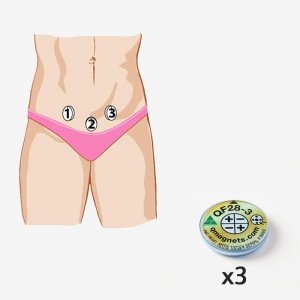
“I have lower back pain and have tried many therapies for relief. Within an hour of wearing a QF28-3 magnet I had 50% relief, my first good night’s sleep in over two years, and the following day I was up to 80% relief.
My husband suffers from shoulder pain due to an old injury and within two hours of wearing two QF28-3 magnets said the ache had almost vanished.
I would definitely recommend anyone try them, they really work wonders.”
T. Combe, South Australia
Individual experiences naturally vary, but stories like this reflect why many people choose to explore static field therapy as part of a conservative, non-pharmaceutical approach to managing musculoskeletal pain.
Why Experiences Can Differ
One of the key principles behind Q Magnets is that outcomes depend on more than simply wearing a magnet.
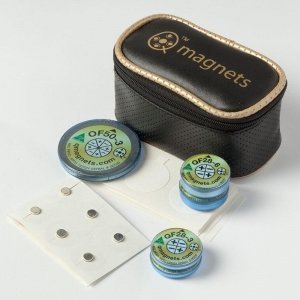
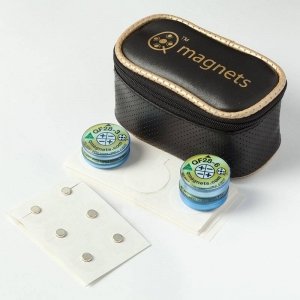
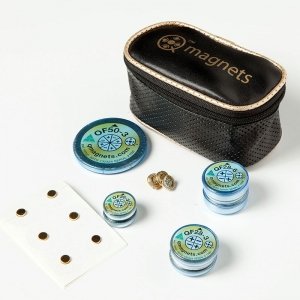
Q Magnets are precision multipolar medical magnets designed to create localized static magnetic field gradients. Their educational framework focuses on three interacting variables known as Field | Dose | Placement.
Why Field | Dose | Placement Matters
Field
Q Magnets use engineered multipolar magnetic configurations that create localized field gradients. Research suggests biological interactions may depend more on field geometry than magnetic strength alone.
Dose
Dose includes factors such as magnet size, exposure duration, tissue depth, and cumulative wear time. More is not always better. The most appropriate dose depends on the anatomy and intended application.
Placement
Correct placement is often one of the most important variables. Small changes in positioning may alter how localized magnetic field gradients interact with superficial tissues, which is why condition-specific placement guidance is recommended whenever possible.
Understanding Lower Back Pain
Lower back pain is not a single condition. It may arise from muscles, ligaments, joints, discs, or surrounding connective tissues. In many people, persistent pain may also involve changes within the nervous system, including increased sensitivity of local nerve pathways.
Modern recovery science increasingly recognises that ongoing pain is influenced by more than structural tissues alone. Nervous system regulation and recovery physiology may also play an important role.
Within this framework, Q Magnets are positioned as a form of static field therapy that creates localized magnetic field environments. Proposed mechanisms discussed in the scientific literature include possible influences on membrane excitability and sensitized nerve behaviour, although research is ongoing and individual responses may vary.
An Interesting Shoulder Pain Observation
Although the original focus was lower back pain, T. Combe also shared her husband’s experience with an old shoulder injury.
Long-standing shoulder pain can have many causes, including previous trauma, tendon irritation, muscular overload, degenerative change, or persistent sensitization.
His report of noticeable improvement after applying two QF28-3 magnets highlights an important point. Q Magnets are not limited to one body region. When appropriate Field | Dose | Placement principles are followed, they may be applied across a wide range of musculoskeletal conditions using condition-specific placement protocols.
As with all testimonials, this represents one individual’s experience and should not be interpreted as a guarantee of similar outcomes.
Static Field Therapy as Part of a Broader Recovery Strategy
Static field therapy is increasingly being explored alongside other conservative recovery approaches, including:
- Physiotherapy
- Exercise rehabilitation
- Photobiomodulation (red light therapy)
- Manual therapy
- Recovery optimisation strategies
Unlike technologies that continuously deliver energy, precision multipolar medical magnets create localized static magnetic field environments that can be worn for extended periods. Q Magnets describes this as creating a wearable recovery environment, providing continuous passive exposure rather than active energy delivery.
An Important Note About Disc Pain
Disc-related lower back pain deserves particular attention.
A herniated or ruptured disc may place direct mechanical pressure on spinal nerves. This type of compression requires appropriate medical assessment.
Based on clinical observations, Q Magnets are not expected to relieve pain caused by direct mechanical nerve compression. Professional medical advice should always be sought if symptoms are severe, progressively worsening, or accompanied by weakness, numbness, or changes in bladder or bowel function.
Using Q Magnets Safely
Q Magnets are passive, non-powered medical devices intended to provide temporary, localized relief of minor aches and pains when used according to the Instructions for Use.
Important safety considerations include:
- Do not use near pacemakers or other magnetically programmable implanted medical devices.
- Do not apply over transdermal medication patches.
- Do not place directly over open wounds.
- Seek assessment from a qualified healthcare professional if symptoms are severe, persistent, or unexplained.
- Correct anatomical placement is important for appropriate application.
The Bottom Line
T. Combe’s experience highlights two themes commonly seen in customer stories.
First, many people living with persistent lower back pain begin looking for conservative options after trying multiple therapies.
Second, success in one body region may encourage people to explore whether the same principles may be appropriate for other musculoskeletal conditions, such as shoulder pain.
While responses to static field therapy vary between individuals, Q Magnets takes a systems-based approach centred on Field | Dose | Placement, precision multipolar medical magnets, and scientifically cautious communication. Rather than viewing magnetic therapy as a one-size-fits-all solution, this framework recognises that anatomy, placement, exposure, and individual physiology all contribute to the overall experience.