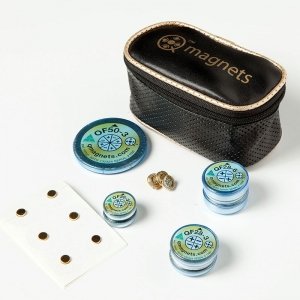
Magnetic Therapy for Headaches and Migraine Using Q Magnets
Headaches and migraine are not one condition. They are a broad group of pain presentations that may involve the neck, scalp, facial structures, vascular factors, nervous system sensitivity, muscle tension, stress, medication use, or more serious underlying pathology.
That is why Q Magnets approaches headache and migraine support carefully.
The question is not simply, “Do magnets work for headaches?” A better question is:
Under what circumstances might precision multipolar medical magnets be worth trialling as part of a broader headache management plan?
The Q Magnets headache protocol identifies cervicogenic and suboccipital headaches as especially relevant areas for trial use, particularly where head pain appears to originate from the neck or base of the skull.
Why Headache Type Matters
A tension-type headache, migraine, cervicogenic headache, cluster headache, TMJ-related headache, and medication-overuse headache may all feel like “head pain,” but they can arise from very different mechanisms.
Some headaches may be appropriate for a conservative trial of Q Magnets. Others require medical investigation first.
Seek professional medical advice promptly for:
- sudden severe “thunderclap” headache
- headache with fever, confusion, weakness, vision changes, or neurological signs
- new headache after head injury
- headache associated with severe hypertension
- suspected tumour, aneurysm, infection, or temporal arteritis
- worsening or unusual headache patterns
Q Magnets should not be presented as a replacement for diagnosis or medical care.
Good Medicine TV Feature (1999)
Cervicogenic Headaches: When the Neck May Be Driving Head Pain
Cervicogenic headaches typically begin in the neck or upper cervical region and may radiate toward the front of the head. They are often associated with neck stiffness, restricted movement, or tenderness around the upper cervical joints and soft tissues.
This is where the Q Magnets perspective becomes more anatomically specific.
Rather than placing magnets randomly around the head, the protocol highlights upper neck and occipital placements, including around C1, C2, C4, the occiput, and suboccipital muscle region.
From an FDP perspective:
- Field refers to the multipolar magnetic field design.
- Dose includes magnet size, exposure duration, and tissue depth.
- Placement is especially important because the target structures may be small and anatomically specific.
For cervicogenic headache, placement is not a minor detail. It may determine whether the magnetic field environment is positioned close enough to the relevant sensitized tissues.
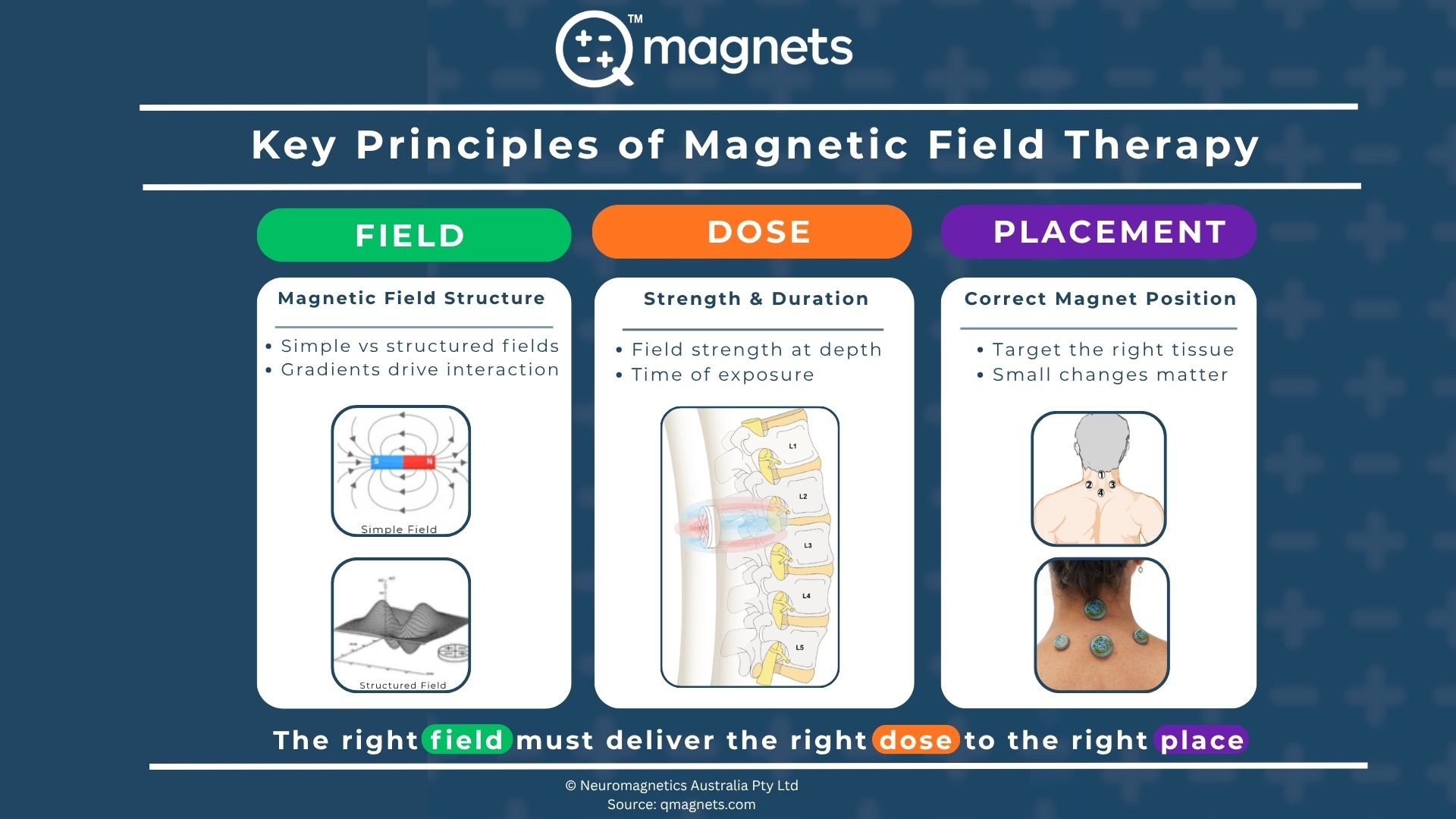
If you’re ready for practical application, follow our Headaches and Migraine Treatment Protocol for detailed magnet placement and product recommendations.
Suboccipital Headaches and the Base of the Skull
Suboccipital headaches often relate to the small muscles and nerve-sensitive structures at the base of the skull. These tissues can become tender, overloaded, or sensitized, especially in people with prolonged sitting, forward head posture, neck strain, or previous whiplash.
The Q Magnets protocol suggests central placement over the suboccipital muscle group, commonly using a QF28-3 or smaller QF20-3 depending on the region and practical fit.
This is a good example of why Q Magnets should not be thought of as generic “pain magnets.” The clinical reasoning is anatomical: identify the likely contributing region, then match the field, dose, and placement to that region.
Real-Life Story: Overcoming Migraines with Q Magnets
Discover How Q Magnets Can Help with Pain Relief – A Real-Life Story Inside by Q magnets
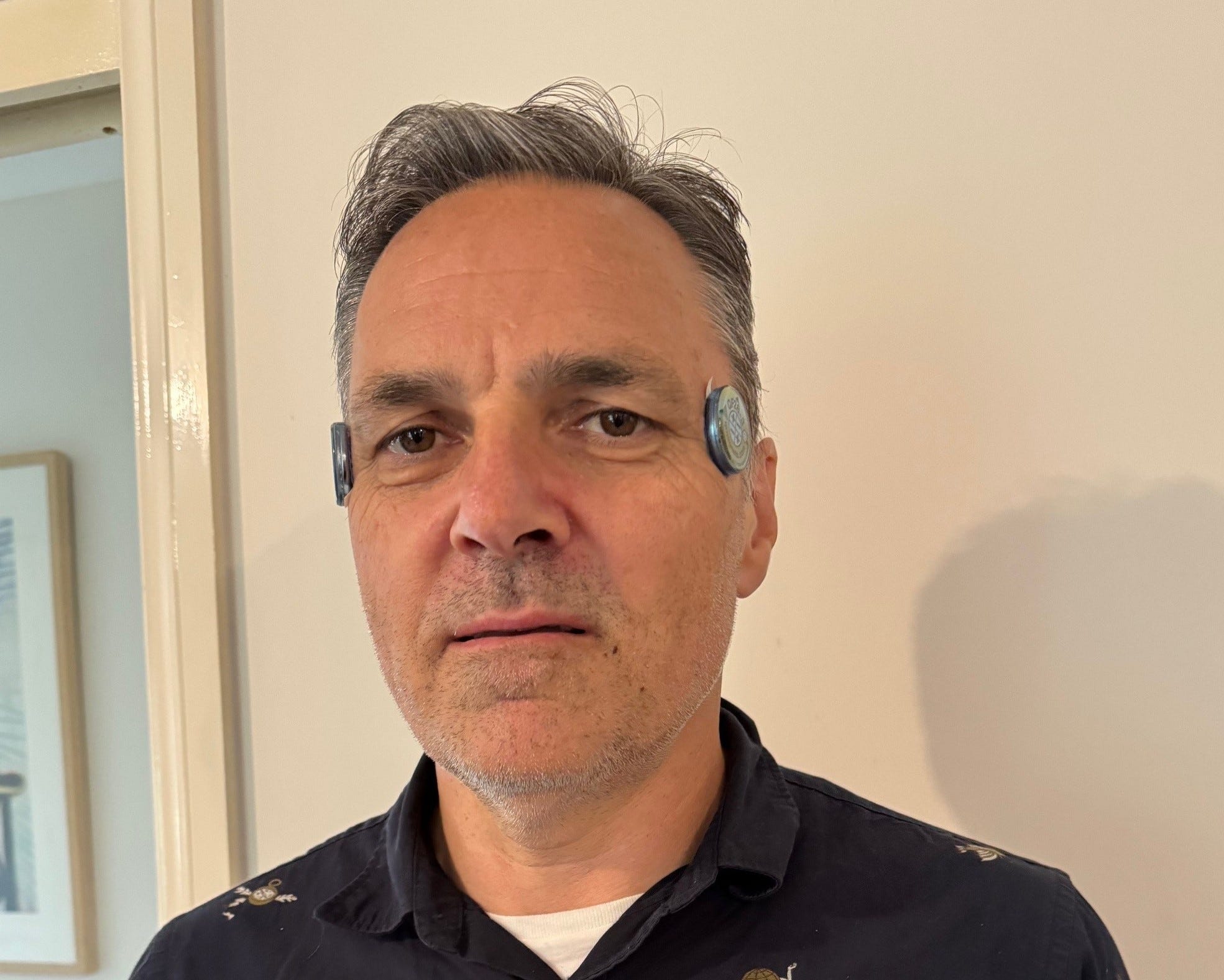
(James looking disheveled after an international flight)
Real Customer Experiences: Q Magnets Testimonials for Everyday Comfort and Recovery
Vickie’s Migraine Recovery Journey
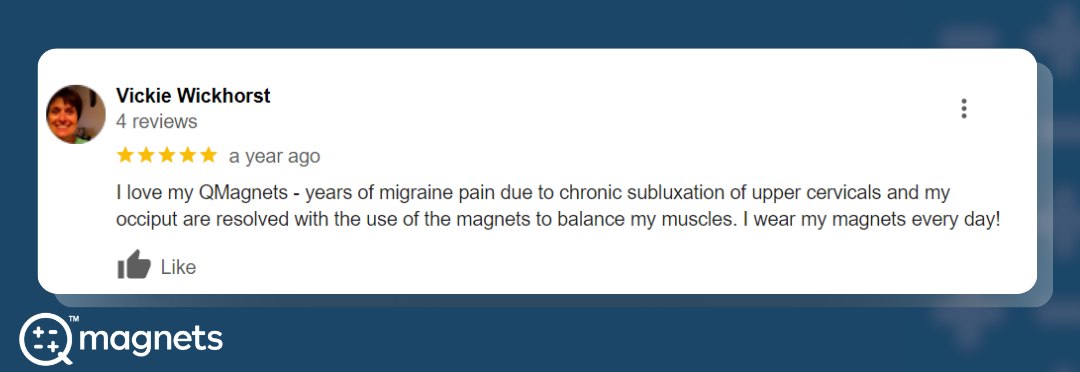
Vickie shared that she had experienced years of migraine pain along with persistent neck tension before discovering Q Magnets. She explained that she wore the magnets every day as part of her regular routine and found that consistent use made a noticeable difference in her comfort. According to her testimonial, she associated her migraines with chronic upper cervical and occipital tension, so she focused on placements that supported those areas. She also reported improvements in lower back pain and muscle tightness, making the magnets part of her broader wellness routine rather than a solution for just one symptom. Vickie described wearing the magnets throughout the day to help manage discomfort related to her work. She felt that regular use supported better daily function and improved her overall quality of life. While her experience is personal and may not reflect the results of every user, it demonstrates how consistency and thoughtful placement became important parts of her approach. Her story illustrates how some individuals choose to incorporate Q Magnets into their long-term migraine and pain management routine.
Jenny’s Family Routine for Chronic Migraine Support

Jenny shared her family’s experience caring for her husband, who had been living with chronic pain, fatigue, nerve-related symptoms, and persistent migraines for many years. After trying a variety of conventional treatments, they decided to include Q Magnets as part of his daily recovery routine. According to Jenny, her husband regularly placed magnets around both temples, the forehead, and the back of the neck, while also using a Q Magnet Blanket during periods of rest. She explained that the blanket eventually became a permanent part of their home because it was convenient to use throughout the day. Rather than expecting a quick fix, the family focused on making magnetic therapy part of their everyday recovery habits. Jenny reported that her husband experienced meaningful improvements in comfort, although he continued to manage his underlying conditions. She also tried the magnets herself for lower back discomfort and later recommended them to other family members based on her personal experience. Their story highlights how some families integrate Q Magnets into a long-term wellness routine to help support comfort and quality of life while managing chronic migraine-related symptoms.
Migraine and Nervous System Sensitivity
Migraine is more complex than ordinary head pain. It may involve altered sensory processing, light and sound sensitivity, nausea, aura, and changes in neurological excitability.
Q Magnets does not claim to cure migraine. A more careful and credible position is that magnetic therapy may be worth exploring as a supportive strategy in selected cases, particularly where neck tension, occipital sensitivity, or facial/temple pain patterns appear relevant.
Q Magnets’ broader nervous system framework emphasises that multipolar medical magnets may influence sensitized nerve behaviour through localized field gradients and possible effects on membrane excitability.
This is not the same as saying magnets “block pain signals.” A better description is:
Precision multipolar medical magnets may help create localized static field environments that could support nervous system modulation in some users.
Why Placement Can Matter More Than People Expect
What the Research Language Should and Should Not Say
Scientific communication around magnetic therapy must be careful.
Q Magnets should avoid claims such as:
- “magnets cure migraine”
- “magnets stop headaches”
- “magnets increase circulation and fix the problem”
- “stronger magnets always work better”
More appropriate language includes:
- “may support”
- “may influence”
- “is proposed to”
- “some users report”
- “may be worth trialling”
- “placement appears important”
This aligns with the Q Magnets Roth-proof communication framework, which prioritises plausible mechanisms, careful language, and avoidance of exaggerated certainty.
Research Language Guidance
Conclusion: Headache Support Requires More Than “Put a Magnet Where It Hurts”
Headaches and migraine require careful thinking. Some are simple and short-lived. Others are complex, chronic, or medically significant.
The Q Magnets approach is strongest when it remains specific, anatomical, and cautious.
For cervicogenic and suboccipital headache patterns, the logic is especially clear: identify the likely neck or base-of-skull contribution, then apply the Field | Dose | Placement framework to create a more targeted static field environment.
Q Magnets should be viewed as a conservative adjunctive tool, not a standalone cure. When used thoughtfully, they may offer a practical way to explore field-based nervous system support for selected headache and migraine presentations.
Why placement can matter more than people expect
Magnetic fields weaken rapidly with distance. This means a magnet placed a few centimetres away from the intended structure may create a very different exposure than one placed accurately. This is why Q Magnets uses the Field | Dose | Placement framework rather than a simple “stronger magnet is better” explanation.
Temple, Occiput, Neck and Face Placements: Different Targets, Different Logic
The protocol identifies two common headache and migraine placement concepts:
- temple placement
- occiput or base-of-skull placement
It also notes that if the headache appears to originate from the neck, the neck pain protocol may also be relevant.
This creates a practical educational distinction:
Temple or facial placement
May be considered when pain is felt around the temples, forehead, face, or eye region.
Occiput placement
May be considered when symptoms involve the base of the skull, upper neck, or posterior head.
Neck placement
May be relevant when headache patterns appear linked to neck stiffness, posture, whiplash history, or cervical joint sensitivity.
TMJ placement
May be relevant where jaw dysfunction, clenching, or temporomandibular joint irritation contributes to head pain.
Why Q Magnets Uses Multipolar Medical Magnets
Q Magnets are positioned as precision multipolar medical magnets rather than generic magnetic products. The distinction matters.
Multipolar designs use engineered polarity arrangements and localized field gradients. Q Magnets’ positioning documents describe these as field-based recovery technologies designed to create localized magnetic field environments rather than continuously delivering energy into tissue.
This helps explain why Q Magnets focuses on:
- field geometry
- tissue depth
- exposure duration
- anatomical placement
- symptom pattern
- practitioner-guided reasoning where appropriate
A Practical Way to Think About Q Magnets for Head Pain
For headaches and migraine, Q Magnets may be most logically considered when:
- the headache pattern involves the neck or base of skull
- symptoms appear linked to muscle tension or cervical sensitivity
- temple or facial pain is part of the presentation
- TMJ dysfunction may be contributing
- the user wants a non-drug adjunctive option
- medical red flags have been ruled out
- placement can be performed accurately and consistently
They are less appropriate as a first response when symptoms suggest a serious medical cause.
The Role of Testimonials
The protocol includes headache and migraine testimonials, including a chronic migraine story from John Kelly and other customer experiences.
Testimonials should be used carefully. They do not prove that Q Magnets will work for everyone. Their value is educational: they show how real users describe patterns of use, placement, trial-and-error, and perceived changes.
For this page, the strongest testimonial should be embedded after the migraine section, especially if it includes:
- duration of migraine history
- what had been tried before
- where Q Magnets were placed
- what changed
- whether placement accuracy mattered